I’ll start off this review by saying- this is precisely how I found this secret gem, I scoured for hours for best online reviews and yes, I actually do read them. So with that, I implore you to have the patience to do the same, or in the very least take a chance on this place, and I guarantee you, you won’t regret it! The staff are so kind and helpful, not pretentious as predicted when you look at the menu and location of a boutique restaurant. I will admit where I went wrong that evening was the rookie mistake of indulging in the fresh warm bread, I should have saved my stomach for the several courses that were yet to come. We turned the two hour evening into a four hour evening and no one rushed us! I recommend EVERYTHING WE ORDERED: the roasted beet and asparagus salad Avocado and grapefruit micro green salad Risotto with mushrooms and parm Pan seared salmon salmon with potato and picked papaya and leek relish (so creative and delish), but I looked at the steak as well as the vegetarian dish and I knew there was no wrong choice, but yet I wanted to try them all. In this instance, I knew I’d need to come back with my girlfriends, just so we could eat off each other's plates and I could try even more. I’m a dessert fein as picky as they come and they nailed the warm apple tart with custard! We also tried the orange and olive oil cake YUM!!! Well, the secret is officially out, and it’s about Thyme people found this gem like we did! (Yup, couldn’t resist). Such a great name, why not?! Enjoy- and tell them Natalie sent you!! YOU ARE WELCOME :)
Overview
If you’ve ever wandered down 496 Hamilton Ave, Palo Alto, CA 94301, United States, you’ve probably noticed the understated charm of Thyme. I stopped in on a breezy Friday evening after a long week of meetings nearby, not expecting much beyond a decent dinner. Instead, I found a place that understands how to turn seasonal ingredients into something memorable. From the moment I glanced at the menu, it was clear this wasn’t just another neighborhood diner-it was a thoughtfully curated dining experience rooted in freshness and flavor.
The first thing that stood out was the focus on herbs, produce, and clean cooking techniques. The kitchen leans into farm-to-table principles, a movement widely supported by organizations like the James Beard Foundation, which emphasizes sustainability and ingredient integrity. You can taste that philosophy in dishes like the roasted chicken with lemon and fresh thyme jus, where the herb isn’t just a garnish but the backbone of the flavor. I’ve worked in hospitality consulting for small restaurants in Northern California, and I can say from experience that sourcing quality ingredients consistently is no small feat. It requires trusted local suppliers, seasonal menu planning, and disciplined kitchen processes. Thyme seems to have mastered that balance.
During my visit, I tried their house-made ricotta toast as a starter. The texture was creamy yet light, topped with roasted vegetables and a drizzle of herb-infused olive oil. According to research from the Harvard T.H. Chan School of Public Health, diets rich in fresh vegetables and healthy fats contribute to improved heart health. While I’m not here to offer medical advice, it’s reassuring to see a restaurant that naturally aligns with those principles without compromising taste. The flavors were layered and intentional-earthy, slightly sweet, and lifted by aromatic greens.
The menu rotates with the seasons, which keeps regulars coming back. A server mentioned that many of their ingredients come from nearby California farms, and that commitment shows in the vibrancy of every plate. When restaurants rely on seasonal produce, they reduce transportation time and preserve nutrient density. That’s not just good practice; it’s smart cooking. On a previous visit, I brought a colleague from Stanford University who studies sustainable food systems, and even she commented on the kitchen’s thoughtful execution. She appreciated how the dishes reflected regional agriculture rather than chasing trends.
Service deserves a mention too. The staff was attentive without hovering, knowledgeable about wine pairings, and honest in their recommendations. I asked about gluten-free options for a friend, and instead of vague answers, the server clearly explained the preparation methods and possible cross-contact. That level of transparency builds trust. In an industry where food allergies and dietary preferences are increasingly common, clarity matters.
Reviews from locals echo similar sentiments. Many praise the relaxed ambiance and consistently high standards across different menu items. One regular I chatted with at the bar told me she visits at least twice a month because the quality never dips. Consistency is often the true test of a restaurant’s expertise. It’s easy to have one great night; it’s much harder to maintain that standard week after week.
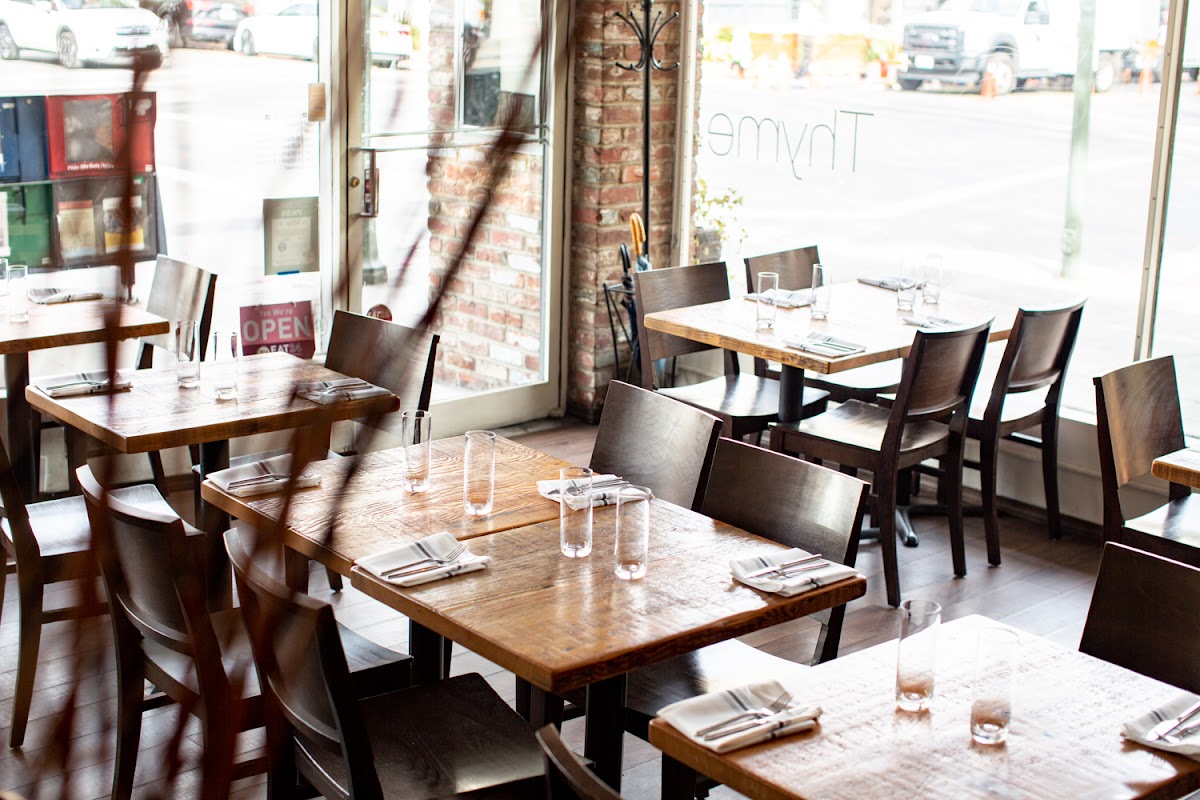
The interior strikes a balance between modern and cozy-warm wood tones, subtle lighting, and an open kitchen that lets you watch the chefs at work. There’s something reassuring about seeing the cooking process unfold in real time. It signals confidence and accountability. When a restaurant has nothing to hide, it shows.
Of course, like any busy spot in downtown Palo Alto, wait times can stretch during peak hours. Reservations are a smart move, especially on weekends. Parking in the area can also be competitive, though there are nearby garages within walking distance. These minor inconveniences are typical for central locations and hardly detract from the overall experience.
What keeps me returning is the sense that every element-from menu design to ingredient sourcing-serves a purpose. Thyme isn’t flashy, and it doesn’t rely on gimmicks. Instead, it delivers what diners actually want: thoughtful cooking, reliable service, and flavors that linger long after the meal ends.
Good to know
Service options
✓ Dine-in ✓ DeliveryHighlights
✓ Great dessert ✓ Great wine listPopular for
✓ Dinner ✓ Solo diningAccessibility
✓ Wheelchair-accessible car park ✓ Wheelchair-accessible entrance ✓ Wheelchair-accessible seating ✓ Wheelchair-accessible toiletOfferings
✓ Alcohol ✓ Beer ✓ Coffee ✓ Healthy options ✓ Small plates ✓ Vegetarian options ✓ WineDining options
✓ Dinner ✓ Dessert ✓ Table serviceAmenities
✓ Bar on site ✓ ToiletAtmosphere
✓ Cosy ✓ Romantic ✓ Trendy ✓ UpmarketCrowd
✓ GroupsPlanning
✓ Reservations required ✓ Dinner reservations recommended ✓ Accepts reservationsPayments
✓ Credit cards ✓ Debit cards ✓ Credit cardsPhotos
Location
Reviews
A perfect place for a romantic date. Awesome food (we went for 4 starters And 2 deserts), easy listening music, quiet, and a friendly waiter, Maurizio. My favorites: scallops with caviar, roasted beets, goat cheese with dried apricot.
Best food I have had in Palo Alto!! The lamb was so tender; definitely the best I’ve had. The dessert was a perfect end to the meal (warm apple tart with delicious custard), and the wine paired great. The vibe is relaxed and simple. Menu is small, but that’s because everything on it is cooked perfectly. Cant go wrong with anything here. Highly recommend.
Had the seared scallops and the lamb. Husband had the crab cakes. Wonderful!!!! Loved the waiter! Went for our anniversary and was totally worth it. Will be back again.
The food here is so good! But the best part of this restaurant is actually the service. It's friendly and passionate - we hugged our server on the way out
My boyfriend and I brought my mother here for her birthday dinner. The food was beyond delicious. The server was super nice. I love the cozy but chic atmosphere. The chef came out to ask my mom about putting something in her meal that isn't usually in it which was very considerate. They even put a candle in her dessert and sang her Happy birthday! They really do their best to accommodate. It was still early in the evening so there weren't many costumers yet but the other costumers also sang along which was really nice of them. None of us had ever been there before but I'm so glad I chose to celebrate my mom's day with her here! Would highly recommend to anyone!
Had an amazing dinner here. Promptly greeted by the chef, Winston. You can tell that Winston loves what he does, he prepared our food like he was serving his family on a special occasion. Had an order of mussels, perfectly cooked and seasoned. Best part was doing some of the bread in the juice, soaked up all the flavor. Ordered the steak medium rare, it came out juicy and tender, full of flavor, simply but perfectly accompanied with mushrooms and onions. Kat was our server for the night, Kat is a real treat. Entertaining throughout the whole dinner, explained everything beautifully. Definitely a place to go for an intimate dining experience.
Very sophisticated flavors and presentation, much more than you'd expect for a casual neighborhood place, which this is. The kitchen really hits it out of the park. The wine list is impressive as well: for example the by-the-glass Cab Franc has that perfect musty edge that makes it pair well with all the food. It takes guts to do that because some people don't like that... You can dress, you can go somewhat casual, it's all good. Good for talking because it's not too noisy.